Monthly Archives: August 2012
Are Parrots Difficult Pets?

NOTE: I have a new pet behavior blog located at http://www.SoMuchPETential.com/blog. Thanks!
In a recent issue of online Good Bird Magazine, president of Good Bird, Inc. and internationally recognized trainer and consultant Barbara Heidenrich offers a great answer to the question…
Are parrots difficult pets?
“In my experience parrots are neither inherently good companion animals nor inherently bad companion animals. The behaviors parrots choose to exhibit are the result of what earns them reinforcers or what will cause an aversive  stimulus to go away. In other words, parrot behavior is the result of our behavior. If we choose to reinforce behaviors we like, we will see those behaviors exhibited more often. If we try to control parrots through unpleasant experiences we are likely to create agressive behavior or fear responses.
The bottom line is parrot caregivers who are armed with tools and information on training their parrots with positive reinforcement are likely to have great sucess with a parrot in their home. Those who rely on coercion are sure to encounter problems and sadly miss out on the incredible relationship based on trust once can have with a parrot. The methods we choose to influence parrot behavior determine the outcome, not the genetics of the parrot.”
Barbara Heidenrich has been a professional in the field of animal training since 1990. She is president of Good Bird Inc. providing parrot behavior and training products. Barbara also consults on animal training in zoos and other animal related facilities. She is past president of the International Association of Avian Trainers and Educators.
Through ArtWorks Cincinnati Summer Project, Talents Bloom
If you’ve driven around Greater Cincinnati this summer, you may be seeing new color in unexpected places. Teenage apprentice artists have been working side-by-side professional artists as part of ArtWorks Cincinnati summer program. Actually  there are 115 teens who have created 15 beautiful, eye-catching murals to be exact.
Yes, these paintings are great masterpieces with vivid imagery that will enrich communities for years to come. But what is really special to me about this program is the opportunity it provides young, aspiring minds to blossom. It is so much more than just getting together to create art. Apprentices strengthen their communication skills and their confidence. They learn about teamwork and responsibility.
“A lot of them gain skills they never knew they had,” ArtWorks Communication Specialist Marian Kelly told me.
The goal, Marian said, is to ultimately have an ArtWorks mural in every Cincinnati neighborhood…and they are up to 32. 
There is a lot of competition for becoming an ArtWorks apprentice. Each year the organization interviews more than 300 diverse youth between the ages of 14 and 21. Key criteria are a positive attitude, ability to work as part of a group, talent and time availability.

My Thoughts On Positive Reinforcement Vs Dominance In Training
NOTE: I have a new pet behavior blog located at http://www.SoMuchPETential.com/blog. Thanks!
(This is a past Hyde Park Living column.)
People I meet around town are always surprised when I have negative reaction to Caesar Millan. And, it is that surprise that is the very reason why I want to share another view…one on the power of positive reinforcement and the importance of understanding behavior.
To those who believe it is important to be the alpha dog or pack leader, to assert your dominance, I’ve got to ask. How 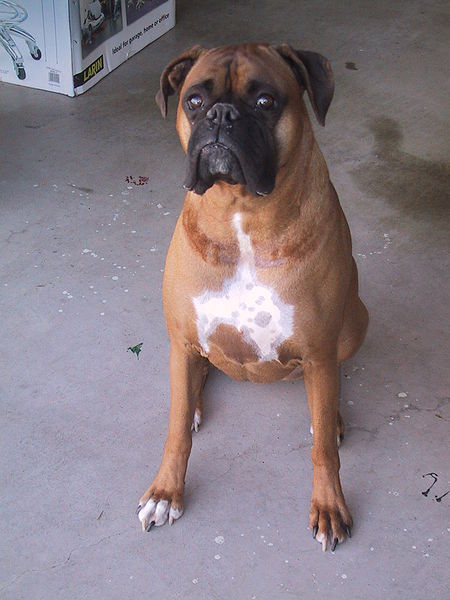 does it help to foster a love of learning in your pet?
One of Ceasar’s strategies for dealing with unwanted behaviors such as fear or aggression (or fear induced aggression) is a technique called flooding. Let me explain. Flooding is a form of training in which the animal is exposed to an aversive stimulus with no possibility of escape until the stimulus no longer arouses anxiety or fear. But can you imagine the level of anxiety and discomfort it causes the animal in the process? It is either sink or swim basically.
Here is an example of how I have seen Caesar work with a dog that exhibits strong aggressive tendencies to children on the street (this would be described as showing his teeth, snarling, having a tense body, and even biting if given the opportunity). He brought the dog on a leash to the sidewalk and had children ride their scooter past the dog, holding it down while the dog struggled and struggled until finally the dog stopped tensing up.
Television viewers saw it as the dog who learned to be submissive and calm. I cringed. Animal behaviorists have another word for it…learned helplessness. Learned helplessness occurs when an animal is repeatedly subjected to an aversive stimulus that it cannot escape. Eventually, the animal will stop trying to avoid the stimulus and behave as if it is utterly helpless to change the situation. Even when opportunities to escape are presented, this learned helplessness will prevent any action.
An example of learned helplessness that you may be able to relate to is Jaycee Dugard, who stopped trying to escape her kidnapper, abuser and father to her children after she realized it would do her no good to try. Yes, she learned how to be calm but what an extreme price to pay for it.
Think about yourself. If you were terrified of tarantulas and someone thought the best way to get you over your fear was to tie you down and cover you with the spiders until you finally quit squirming…how would that make you feel about overcoming fears? How would you feel about the person who wanted to do that to you? Do you think you would be more apt or less apt to be able to cope with other fear inducing situations in the future because of it? Speaking for myself, I can tell you I would probably never forget the feeling of total fear that that person subjected me to.
Systematic desensitization is a much more humane, more positive approach to not just overcoming fear, but also to teaching the animal to re-associate the fear-eliciting stimulus into a feel-good eliciting stimulus. (This process is called counter conditioning.) With systematic desensitization, you gradually expose the animal to what is scary to it and the criteria for advancing to the next step is your watching his calm behavior and only moving forward at a pace that does not elicit even the mildest of fear responses. The beauty of this is that the animal is always in total control. And I don’t know about you but I like knowing I have the power to control my situation.
You Can Help 4C For Children Win A Toyota
Today’s the day! Cincinnati nonprofit 4C for Children needs our vote to win a brand new Toyota Prius.
Serving 33 counties, 4C’s mission is to improve the quality, effectiveness and accessibility of early childhood education and care in the region so every child has a positive experience and a foundation for success in school and life. Some 170,000 children benefit each year from its services to their families and child care providers. That is a lot of kids who are growing to be capable, caring and contributing adults.
As you can imagine, with such a large service region and such vitally important work, dedicated staff log thousands of miles every year visiting child care centers and family child care homes. 4C staff also provide on-site training as an alternative to the more than 1,400 face-to-face workshops and classes offered. Additionally, staff participate in outreach events.
We all want to see children thrive. With so many pressures and challenges on families these days, the work of organizations like 4C is that much more important.
Your one vote can make a huge impact. It is simple to do.
To vote
Simply click on this link for the Toyota 100 Cars for Good on Facebook and place your vote. BUT YOU MUST DO IT TODAY!
Olympic Athlete Oscar Pistorious Met His Match
At 25, Oscar Pistorious is a world record holding sprinter from South Africa. At 8, Ellie May Challis is a fun-loving little girl from Essex, England. They both love running and love life, but until this day their paths had never met. What they share are limitless abilities and unwavering determination to not let the fact that they do things differently stand in their way. Word has it that in this indoor field where this was taken, Ellie beat Oscar in all four 15-meter races to the cheers of her twin sister Sophie and older siblings Taila and Connor.