Monthly Archives: November 2012
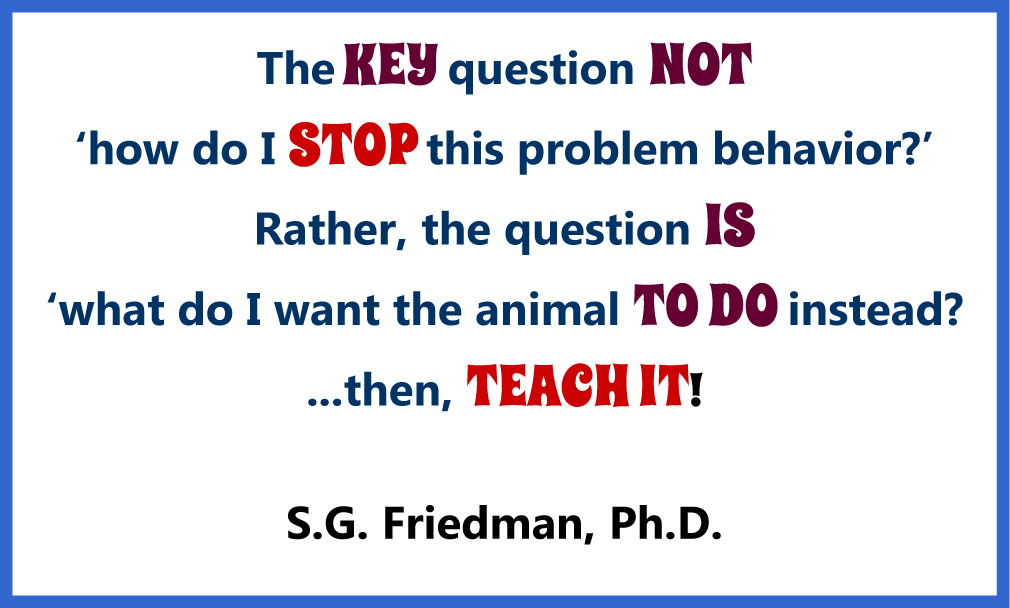
Training: On Solving Pet Behavior Problems

Preventing Dog Behavior Problems At Thanksgiving
NOTE: I have a new pet behavior blog located at http://www.SoMuchPETential.com/blog. Thanks!
Thanksgiving is quickly coming upon us. Oh to taste the turkey…stuffing…sweet potatoes…and pumpkin pie. I can hardly wait! So can Sam….and I bet your favorite pooch too.
So, let’s plan ahead. Sharing your meal with your guests AND your dog doesn’t necessarily have to be part of the holiday. The time to work on 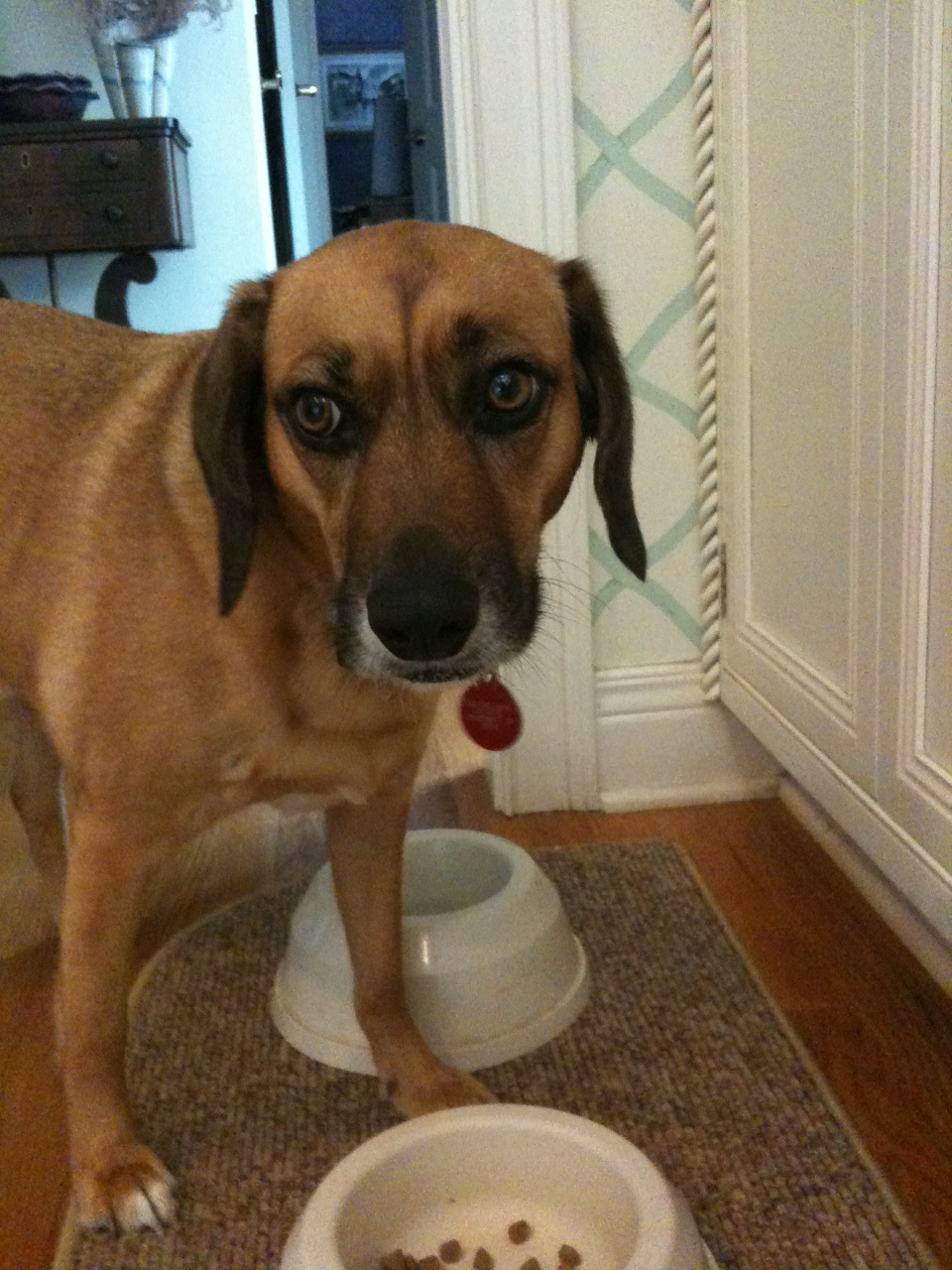 teaching your dog new skills is now – not dinner time on November 22.
Let’s put our applied behavior analysis thinking caps on and brainstorm. Remember, ABA is a systematic approach to solving behavior problems by changing the environment in which the behavior occurs.
We ask ourselves “What happened IMMEDIATELY prior to the behavior (antecedent) to set the ball rolling for the behavior?” and “What happened IMMEDIATELY after the behavior to reinforce it (consequence)?”
I’m going to simplify it and use for the sake of this column that the antecedent is ‘guests sitting at the dinner table with unbelievably savory food on dishes in front of them.’ The behavior is your dog bumping or scratching guests in their seats. (We’ll call this ‘begging.’) The consequence is that eventually your dog may get either attention or turkey or jackpot – BOTH!
How can we change the environment to set your dog up for success? If you know in advance that this is highly predictable behavior, you can use antecedent strategies to give less value to the begging. Some ideas? Satiate your dog BEFORE you sit down by feeding him in advance, redirect his attention by giving him a tasty steak bone to chew on or a foraging toy that will keep his attention for awhile, take him for a long walk or run prior to the meal to increase the value of resting behavior.
Another idea would be to teach your dog – in advance – an alternative behavior that will reap him the same or more reinforcing value than what he would get if he begged while also removing all positive consequences of begging. Remember, as his teacher, his ability to learn is dependent on your reliability (and EVERYONE in your household) to quickly reinforce the behavior you want to see – and every time he does the behavior in the beginning.
So, begin by teaching the alternative behavior (like sitting or laying down) and get it reliably on cue. Once on cue start teaching him to hold that behavior for longer durations before delivering reinforcement. Then, you can cue him to do the behavior before you sit down to a meal and reinforce it. At the same time, if he begs, you can simply push your plate in to the center of the table and turn your back to him while sitting. Practice. Practice Practice.
Dogs are pretty smart. If ‘you’ teach him that begging only gets people to turn away and push food aside but sitting or laying down gets a nifty treat, guess which choice he’ll make?
If you have a dog who is competing with our Sam for the title, World Champion Counter-Surfer, remember, often times the feat is carried out when your back is turned. (We know this from experience.) The simplest solution is eliminating access to the reinforcement that maintains the behavior. In other words, always be cognizant of being sure that tasty food is kept far enough from the counter edge that your dog can not reach it.
Angie Brown Inspires Me
Sometimes in life people cross our paths and it is like destiny that they were meant to find you. They touch us in very powerful ways. Through their  example, their leadership, and their genuine caring, they make us want to be a better person.
Angie Brown is one of those someones.
I actually don’t remember how I learned about Angie’s LinkedIn group – Phenomenal Women of Focus – but I can remember as it was yesterday the first meeting I attended. Even before the night came, Angie’s emails already made me feel important to her. She signed up to become a Good Things Pledge Champion in advance so that she could let others know.
It was an evening when I really needed a boost. How did Angie and her group know? I’m sure they didn’t. But Angie’s bear hug, and an entire room filled with women who wanted to inspire and support each other sure lifted my spirit. They shared stories of how they lost a job only to rediscover themselves, of their accomplishments in a career they love, or of how they were still in the process of figuring out what they want to do with the rest of their lives – and they were excited for the opportunity. They spoke with passion and heart. They gave me a gift more valuable than what any store would have on its shelves.
I’ve since learned Angie has a way of bringing that out in those around her. More than once she has gone out of her way to drop a simple note just to remind me she is there. And gosh, in October I was so honored to have been selected to share my story with the group.
It should really be no surprise to learn that one of the reasons Angie is so related to the Phenomenal Women is because she too rediscovered herself.
There was nothing unusual about the start of that frigid January day. But hours later, with cars whizzing past, an 18-wheeler pummeled into them, crushing the car – and Angie’s entire leg among other injuries. In the months that she lay in her hospital bed, depression set in. For the first time since infancy, Angie had to depend on someone else (her husband) to feed and bath her. She couldn’t help ask the question…”Why?”
But then, soon after, her question became, “Why not?”
“I decided ‘this isn’t who I was supposed to be. I wasn’t going to allow my circumstance to prevent me from making my life count’,” she told me.
Angie did eventually get out of the hospital, and when she did, she left her high salaried corporate job for a new career. It has been seven years now since she has been a certified life coach (her business is ‘The Best is Yet to Come’ coaching), and, she said, she loves what she does as much today as she did when she started.
Her other job is that of loving wife and mother. Anna, their youngest, is close to graduating with a pre-med degree as an honors student. William is also an honors student majoring in engineering, and is captain of his college’s golf team. And 24-year-old Aleia is chief curator for a national museum.
“I want to know, when I leave this world, that I gave up every gift I have been given,” Angie said.
Stopping Parrot Biting Without Force
NOTE: I have a new pet behavior blog. Please visit http://www.SoMuchPETential.com/blog. Thanks!
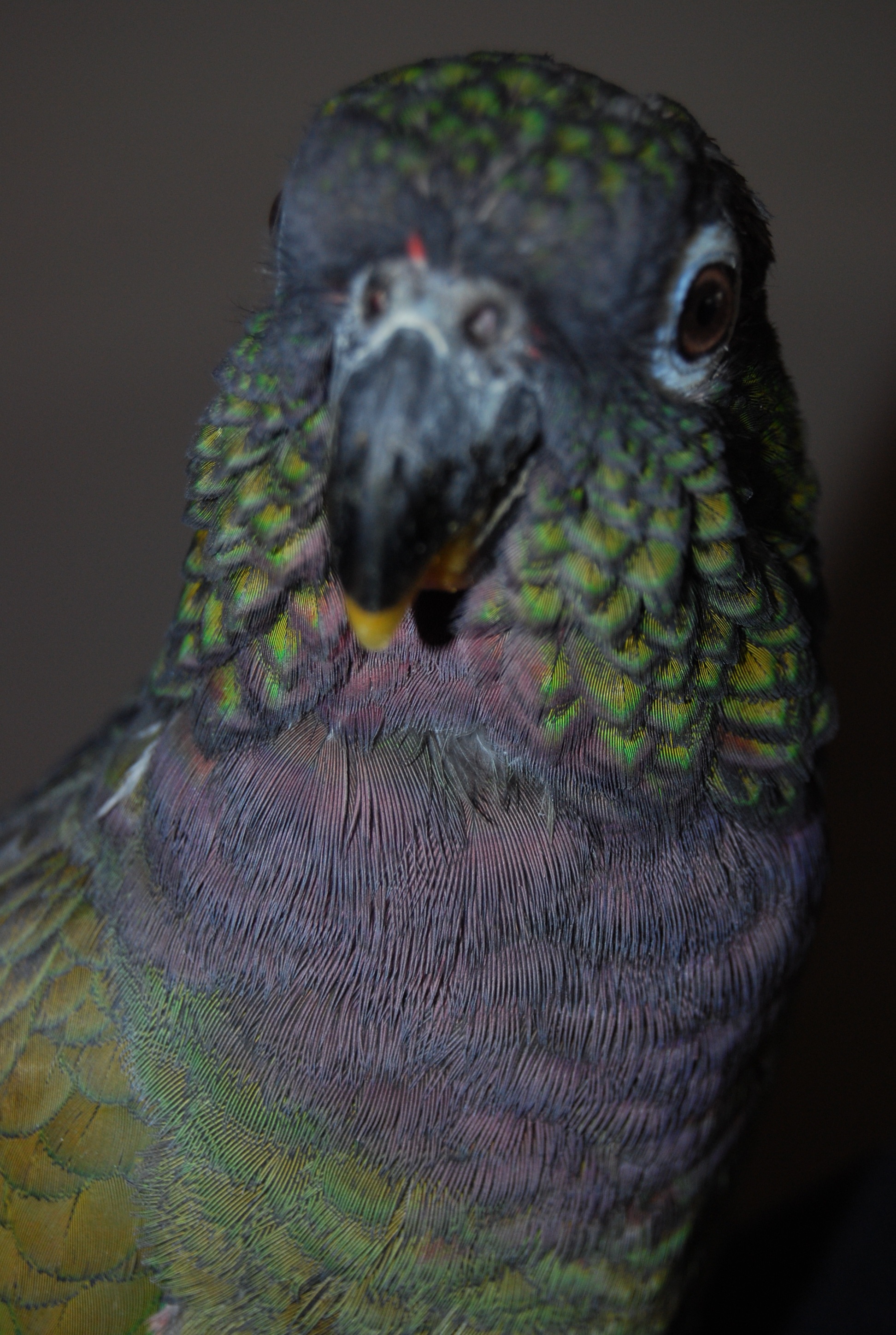
Dreyfuss is a bird who – if I’d let her – would spend her entire day sitting next to me or on me, frequently with her head down for rubs. So how was it that this sweet girl (who actually may be a boy but I’ve never had her sexed) would lung at my bare arm, and even bite it, when I’d put my arm in front of her body before asking for a ‘step up’ from her inside cage perch?
My education in behavior has taught me that biting doesn’t just ‘occur’ in a vacuum, and that before that aggressive behavior happens, a bird behaves with nonaggressive body language (such as dilated eyes, feathers fluffed) to let me know my arm is not wanted in its space. If I get bitten it is because I did not pull my arm away when the bird dilated its eyes or fluffed its feathers, causing the bird to need to escalate its behavior.
Yes, I know that. But I had been watching Dreyfuss’ body language and I just couldn’t see it. One second her body language was telling me she was eager to step up and the next split second she’d lunge.
My turning point came the moment I had written an email to a trainer I know. In it, I told her Dreyfuss’ behavior was ‘unpredictable’. I hit send and then had a WOAH moment. Hold on here, Lisa. You know better than that. And you have the skills to solve this without the use of force and set both you and Dreyfuss up for success.
Applied behavior analysis is a systematic approach to solving behavior problems by changing the environment in which the behavior occurs. It involves looking at the very specific behavior (such as a bird biting or screaming) and the related environmental context that signals and reinforces it. We ask, “What happened *immediately* prior to the behavior (antecedent) to set the whole ball rolling?“ And, “What happened *immediately* after the behavior to reinforce it (consequence)?“
There you have it…the A (antecedent), B (behavior), and C (consequence)’s.
So, let’s look at the ABC’s of this situation.
A(antecedent): Lisa puts hand on cage door
B (behavior): Dreyfuss either rocks from foot to foot or with slight movement
C (consequence): Lisa opens cage door
A: Lisa moves arm to Dreyfuss saying ‘step up’
B: Dreyfuss lunges or bites
C: Lisa removes hand
Prediction: Dreyfuss will lunge or bite more to get Lisa to remove her hand
I know, this doesn’t make sense for a bird that, once is on me, could live there. But obviously there is something about my arm being put in front of her that she didn’t want to have happen. How do I know? Because her behavior of biting/lunging continued and got more frequent.
The thing about studying behavior is that I don’t need to know what Dreyfuss was thinking. I only need to know that the behavior had a function for 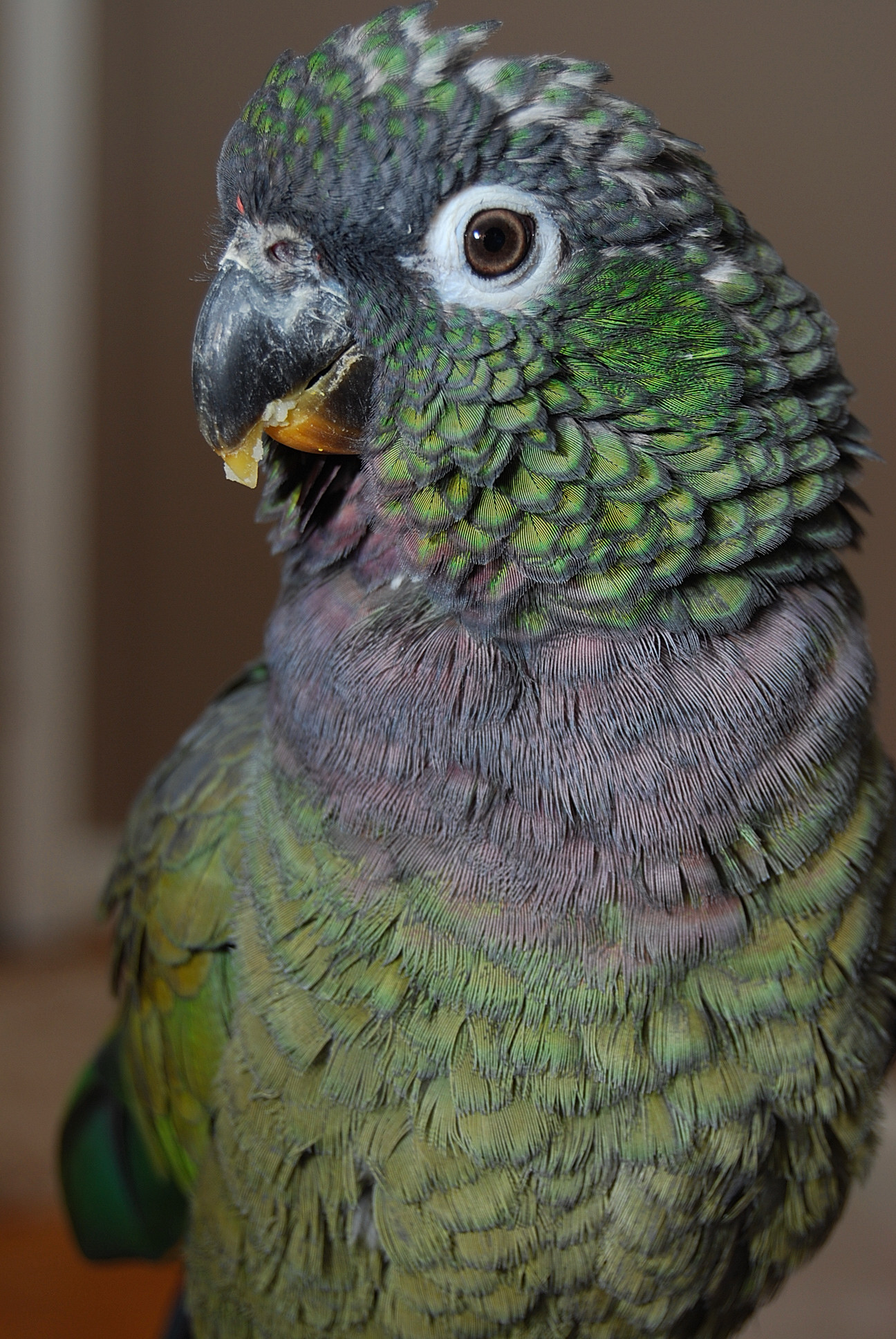 her in her environment and I can then modify the environment to modify the behavior. I like to think about it as teaching new skills.
So, what did I do? Well, I DID NOT use punishment or any kind of force.
What I did do is create a plan that would set us both up for success.
I taught her the contingency that *when* I put my hand on her door, *if* she moves to the left side of the perch, *then* I will put my arm in front of the right side of the perch. And *if* she walks over to and steps up onto my arm, *then* she comes out for attention, seeds, and more.
The power of deciding whether to come toward my arm to come out – or not – was ALL up to HER. And guess what, given the choice, she not only decided to come to my arm every single time – she runs to it and jumps on board.
How great is that!
So, here is the new ABC:
A: Lisa puts hand on door
B: Dreyfuss moves to other side of perch
C: Lisa puts hand at opposite side of perch
2nd ABC:
A: Lisa puts hand at opposite side of perch
B: Dreyfuss moves to hand and steps up
C: Lisa takes Dreyfuss out for attention, seed and more
Taking her out of her cage is that simple now. The beauty of it is that I never used force or punishment. My ‘unpredictable’ bird when it comes to getting her out of her cage, now reliably runs with her feathers relaxed to my arm and as a result we both have confidence in that situation.
To read my post on why parrots bite, please click this link.
DeAnna Hoskins Is A Woman Of Resilience
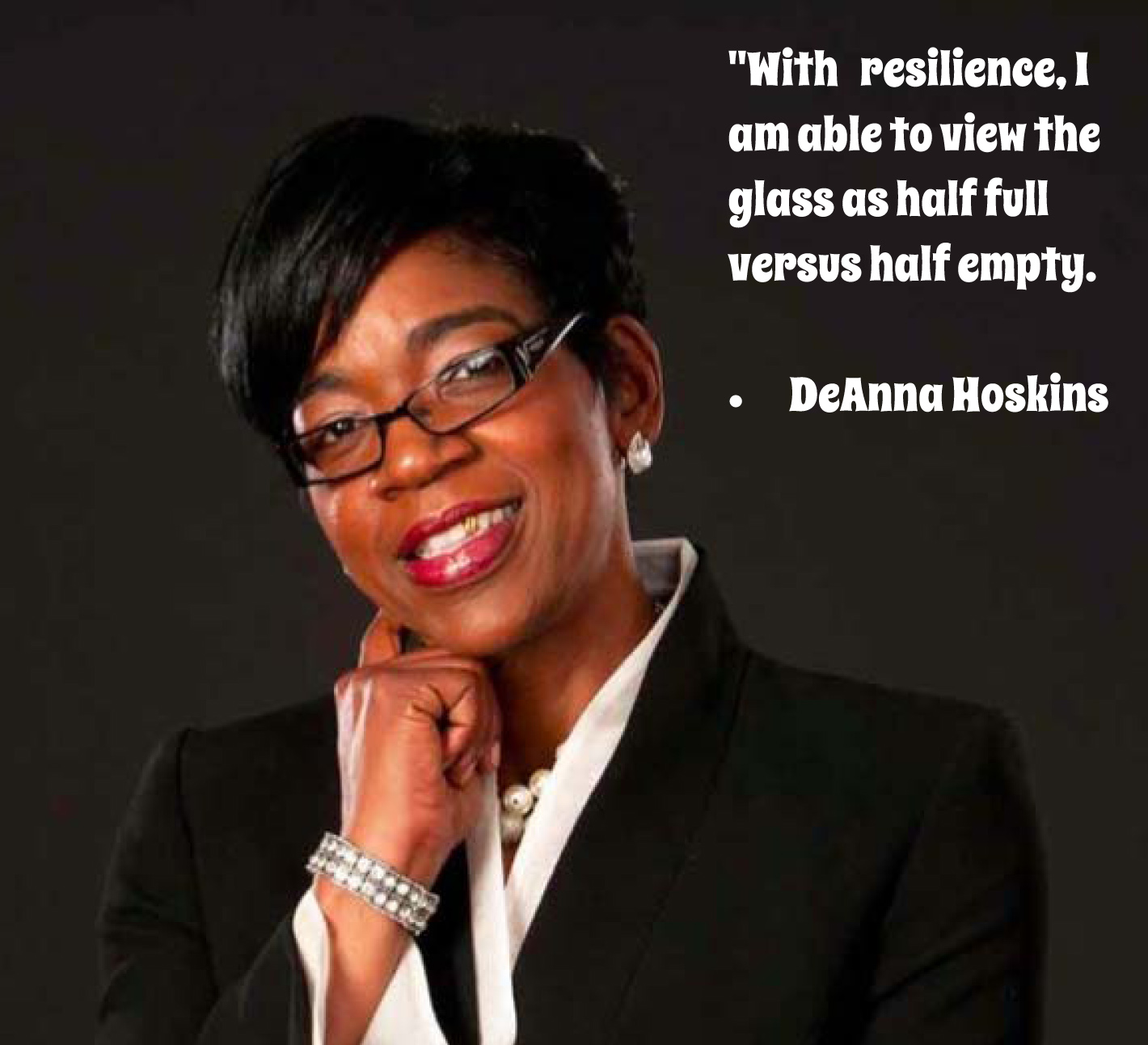
I am SO proud of DeAnna Hoskins. I met her many years ago. A single mother of three, her obstacles were huge but not unconquerable. She found the inner strength to leave behind drugs and an abusive relationship, to find a new path after being incarcerated. DeAnna has three degrees including a master’s degree in criminal justice, and she is considered an expert in the field of re-entry. She is also a licensed clinical addiction counselor, a certified offender workforce development specialist/trainer and a certified recovery/peer-to-peer coach. DeAnna is featured in The Women’s Book as a woman who inspires greatness in others. I don’t know anyone more deserving.
Congratulations DeAnna!